videoart program

curated by Lorenzo Bruni

Digital-Craft Journey

Eleni Kougioumoutzaki

Periplanisi, Apotipomata, Fygi (Vagabondaggio, Impronte, Partenza)

Accademia di Belle Arti di Bologna

2’19”


Periplanisi, Apotipomata, Fygi (Wandering, Traces, Departure) invites us on a journey without a clearly defined point of departure. Departure (Fygi) can mark both the beginning and the end, thus becoming a virtuous circle within memory, but also a constantly evolving present. In Apotipomata, the focal point of this journey, unconscious representations resurface, alluding to the primordial as traces of time and absence through which the present asserts itself. The musical compositions are improvisations conceived at random moments which, only afterwards, come to accompany the videos.

Gioia D’Ostilio

Accumulo Ritardo

Accademia di Belle Arti “Pietro Vannucci” di Perugia

4’36”


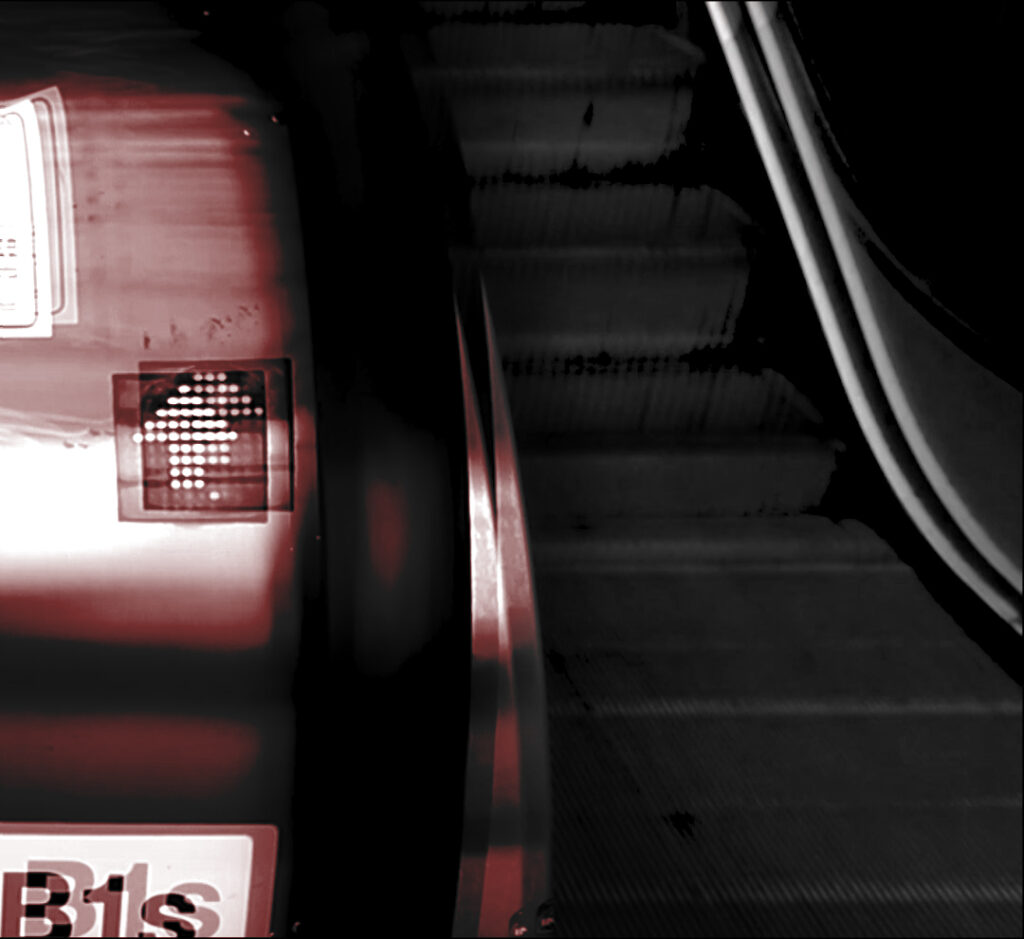
Accumulo Ritardo explores the dimension of the unresolved through the everyday landscape of the Minimetrò in Perugia, an infrastructure designed for continuous movement but traversed by micro-suspensions in which reduced speed expands the perceived duration of the journey.

The sound material of the work consists of field recordings made on site: mechanical noises, vibrations and the sound of the rails are manipulated and spatialized together with vocal samples that resurface like ghostly presences. The result of a thesis project and previously presented only in an academic context, the work takes the form of an audio piece accompanied by a video. The visual component follows the same compositional logic as the sound: the camera captures actions, details and minimal moments that usually go unnoticed, visually reworking them in dialogue with the flow of sound.

The interplay between image and acoustic spatialization engages the viewer’s body, transforming the automatic perception of urban transportation into an experience of conscious listening. Accumulo Ritardo does not aim to represent the journey, but to make perceptible the constant tension between movement and suspension. Listening thus becomes a tool through which to question everyday temporality, leaving the condition of waiting open and without a definitive resolution.

Massimiliano Mollame & Claudia Tossani

Peso Specifico

Accademia di Belle Arti di Catania

1’25”


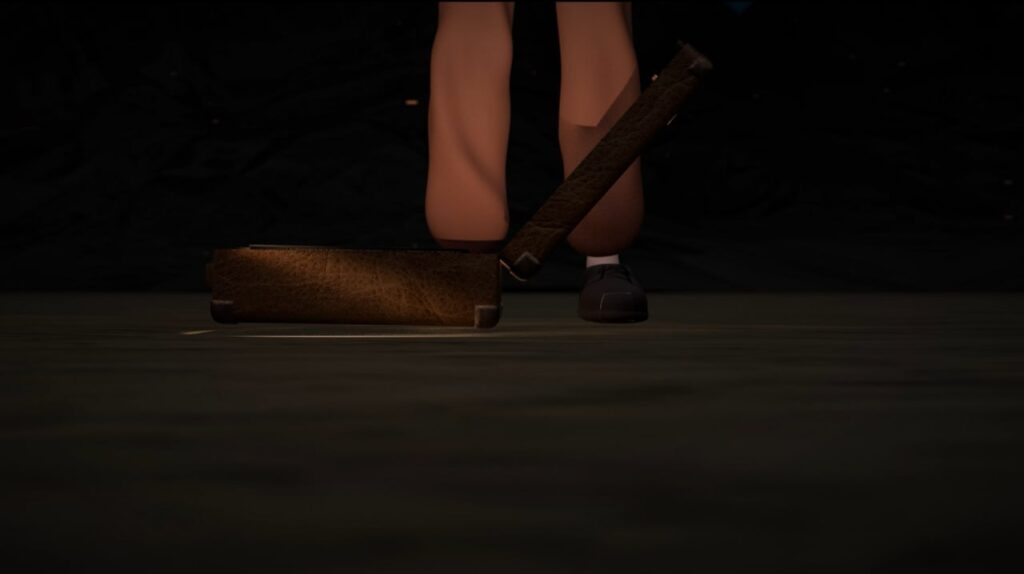
The work investigates the notion of dwelling and belonging in contemporary life, redefining domestic space not as a static architecture, but as a relational and portable device. The bus stop along a deserted road at dusk becomes a non-place where opening the suitcase triggers a temporary re-signification of the ground: a projection of light delineates an intimate square meter, recreating the visual and affective fragments of the hearth. Waiting, traditionally experienced as suspended time, thus becomes an act of active permanence. When the vehicle arrives, the closing of the suitcase (a catalyst for memory and a portable core of one’s identity) extinguishes the room and restores the surrounding emptiness, emphasizing the nomadic and ephemeral nature of our sense of home.
Sofia De Francesch,

(S)confinamento

Accademia di Belle Arti di Firenze

2’58”


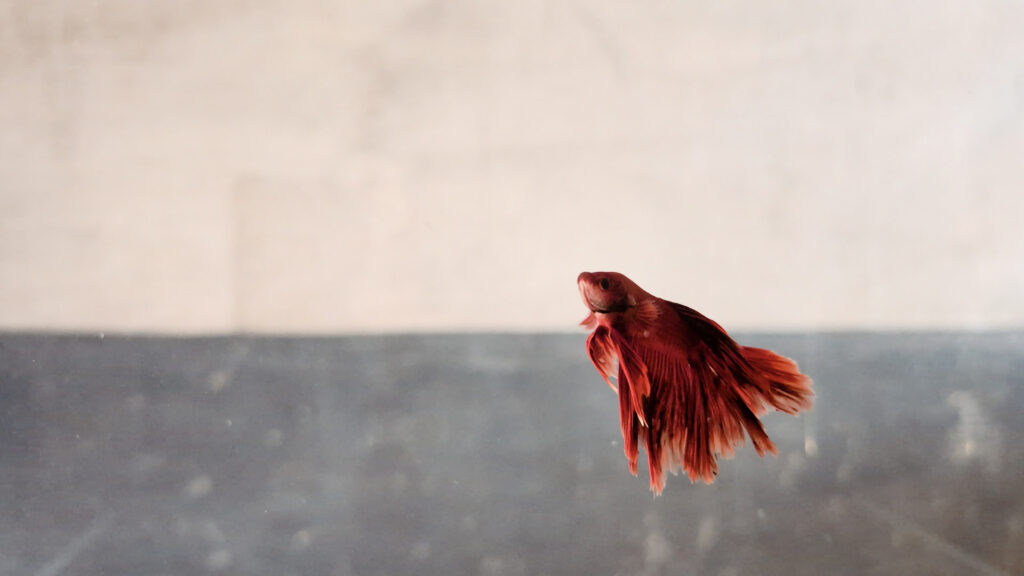
The work stems from a reflection on carceral space and the condition of isolation, investigating the boundary as an element capable of conditioning not only the body, but also perception. A Betta splendens repeatedly crosses the edges of the frame, entering and leaving the field of vision. In the background, a fragment of the cell of the former Carcere Duro delle Murate in Florence evokes a physically delimited space, while the limit of the frame introduces an additional, immaterial and perceptual boundary. The animal seems to continually cross the limit of the image, yet its movement remains inscribed within a system of boundaries that continues to determine its path. Confinement thus shifts from physical space to the space of the image, suggesting a condition in which the boundary can persist even beyond the enclosure that originally imposed it.

Shuhan He

Elsewhere 

NABA Nuova Accademia di Belle Arti

7’59”


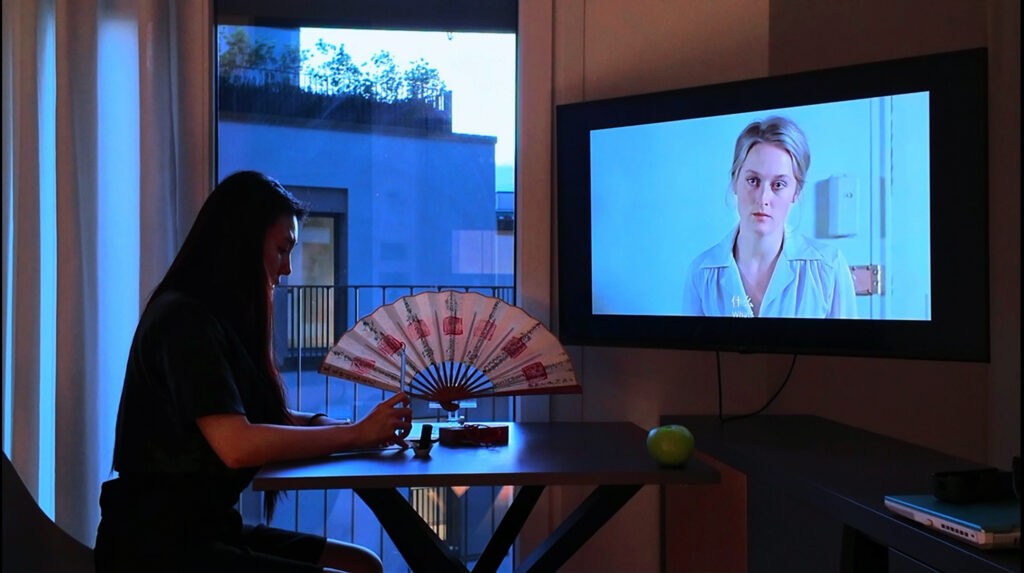
This autobiographical documentary follows one day in the life of a Chinese international student living alone abroad. Inside a small apartment, he uses live-streaming platforms to connect with clients and provides online ritual services based on Chinese Daoist practices to make a living.

Through incense, talismans, an altar, phone screens, client messages, everyday sounds, and moments of silence, the film presents the apartment as several spaces at once: a home, a workplace, a temporary ritual space, and a window connecting him to the outside world.

Rather than explaining Chinese ritual culture or presenting it as something mysterious or exotic, the film focuses on the personal experience of living overseas: how a young person becomes visible through the internet, relies on familiar cultural knowledge to survive, and moves between connection and solitude. When the live-stream ends and the screen goes quiet, the room becomes private again. The film observes this transition and the emotional state that remains after the connection with the outside world disappears.

Lorena Santamaria

Alcune cose durano tanto tempo 

Accademia Albertina di Belle Arti di Torino

3’39”


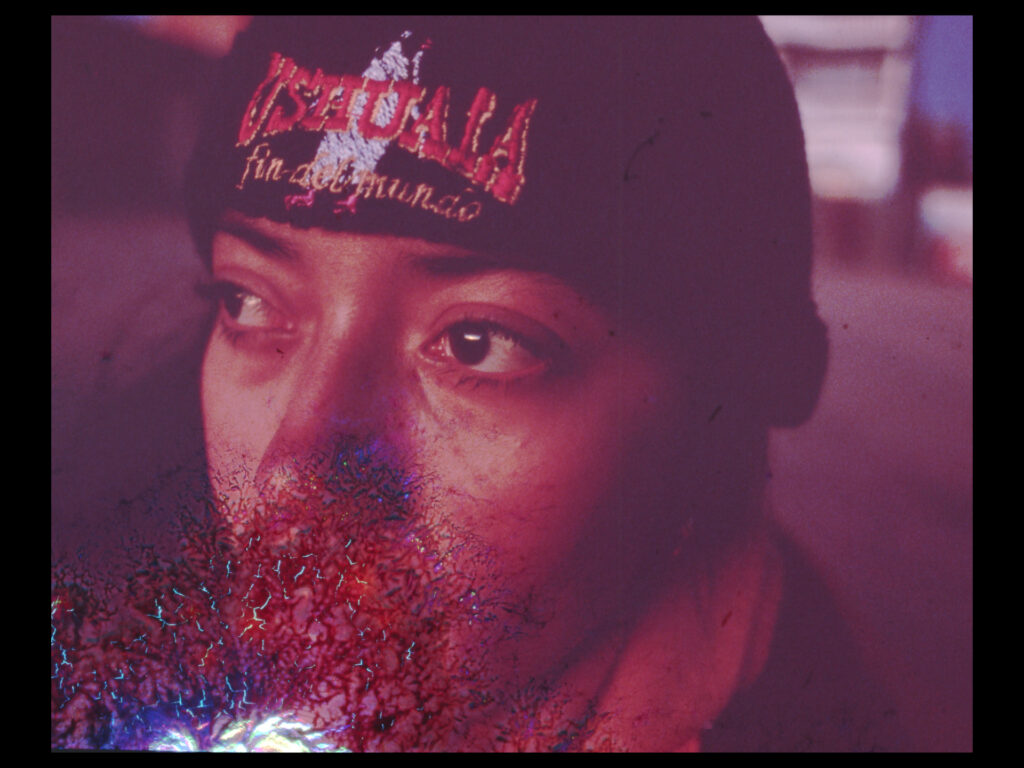
Alcune cose durano tanto tempo is a found footage video that reworks material from my family archive, namely the slides taken by my father, Antonio Santamaria, during his career as a shipboard photographer between 1995 and 1998. The project originated from the discovery of this archive and is loosely inspired by Samuel Beckett’s play Krapp’s Last Tape.

The archive becomes, for the photographer, an opportunity to encounter a lived past, while for those who revisit it today, it becomes a combination in the present of traces of the past. The editing follows the kinestasis technique, creating movement that does not originate from live footage but from the visual connections identified between the photographs. The sound design, by Filippo Giunnelli, follows the same logic of repetition and return, creating an atmosphere suspended between nostalgia and serenity.

Veronica Buono

Il Velo 

Università IUAV di Venezia

8’00”


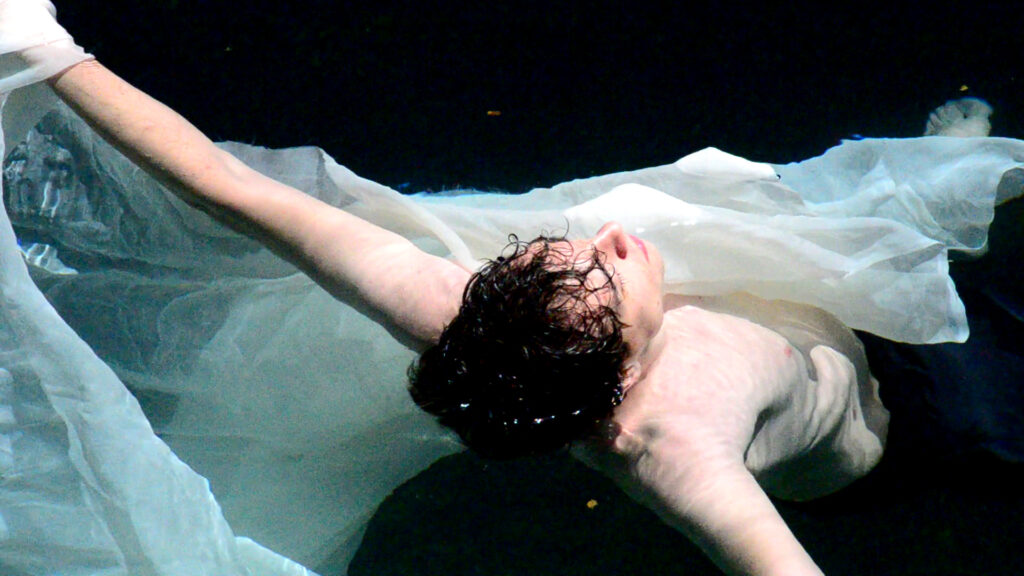
Il Velo originates from the experience of Ezio, the brother of one of the two artists and a professional diver, who lost consciousness during a dive off the coast of Genoa and remained in a coma for several days. The video explores the ambivalent relationship with water: a fascinating, mysterious and generative presence, but also a natural force capable of overwhelming and destroying.

The coma becomes a “temporary stop,” a suspended permanence in a transitional space between life and death, consciousness and vision, memory and dream. In this mental dimension, Ezio enters the realm of water: a church that takes on the symbolic function of a temple, inhabited by a female figure who personifies the element. The veil moved by the figure becomes the instrument of a ritual through which the water seems to decide his fate, choosing whether to keep him in its world or return him to life.

The editing intertwines video materials from Ezio’s personal archive with newly shot footage, giving shape to an intimate and suspended dimension. Guiding the narrative is his first-person account, conveyed exclusively through textual captions.

The work does not reconstruct the accident, but moves through a fragmented memory and what, of that experience, cannot be explained: the opaque time of the coma and the encounter with the element that put his life at risk. That day, the sea tried to keep him for itself; beyond the veil, the water chose his fate and still guards its secret today.

Simone Martinotta

Monade

Accademia di Belle Arti di Roma

2’42”


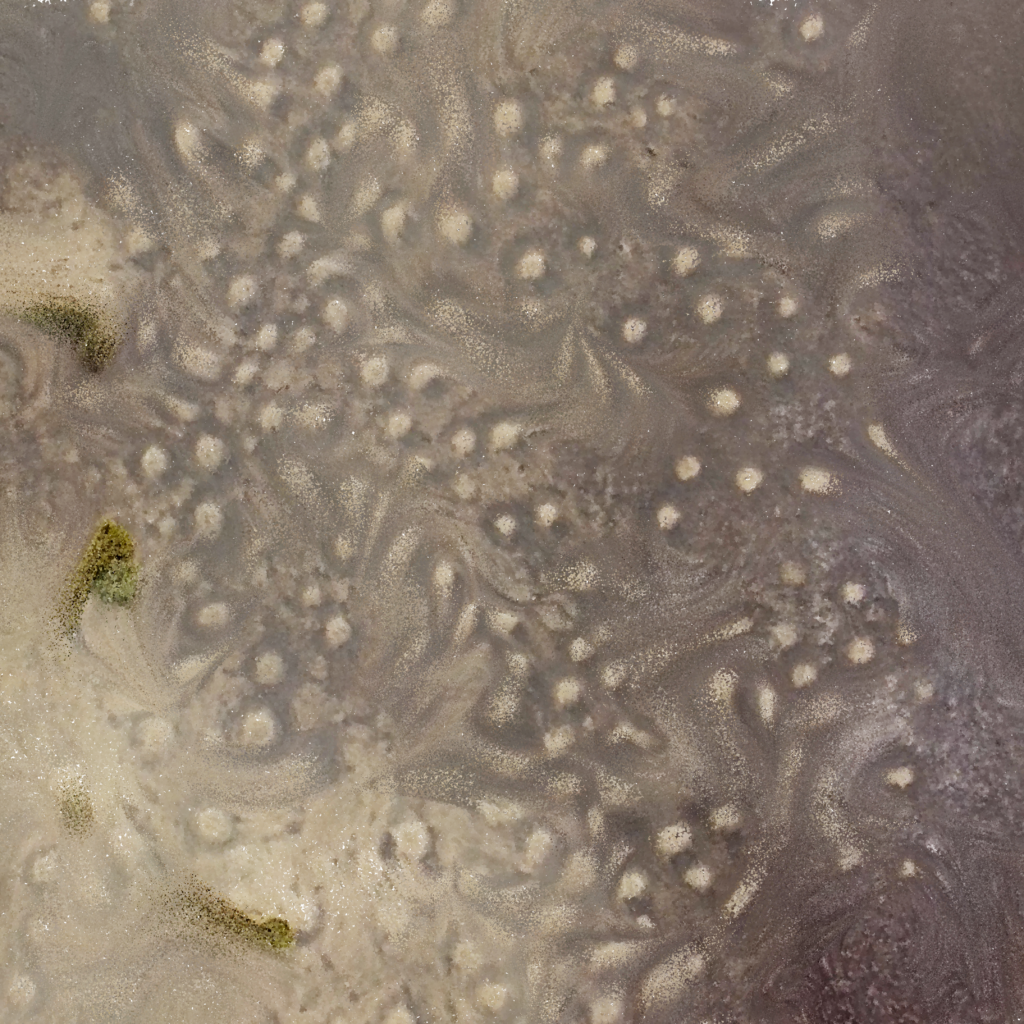
Monade takes the form of a suspended landscape, a zone of tension in which the stability of nature and the Dionysian dimension of the human coexist without resolving into a definitive synthesis. It is not simply a passage between opposing states, but an autonomous space in which being and becoming intertwine and every form remains exposed to the possibility of its own transformation.

From this perspective, the fragment is not a sign of absence, but a generative principle: a threshold from which new configurations emerge. Instability therefore does not represent a loss of order, but a productive condition capable of generating always provisional equilibria. Hybridization does not consist in the simple juxtaposition of different elements, but in the formation of a further reality, defined by a mobile and diffuse system of relations, devoid of stable hierarchies, according to the Leibnizian model of the monad.

Each fragment thus becomes a temporary center of meaning, capable of referring to a never-completed totality that takes shape through the viewer’s experience. It is in the fragility and transience of this lagoon landscape that meaning can emerge: not as a definitive structure, but as a momentary event on the surface of relations. Instability thus becomes an opening, a continuous possibility for new configurations of seeing and thinking.

Matteo Bonino

Cadavere squisito

Accademia Albertina di Belle Arti di Torino

5’10”


The work explores the sexualization of the synthetic, the seduction of the non-living, and the tension between desire and artifice. The title, Cadavere squisito, evokes a body constructed through fragments, a discontinuous and disturbing figure in which heterogeneous elements coexist without ever finding a complete recomposition. It is a metaphor for a contemporary desire that takes shape through accumulations of images, surfaces, and promises, without ever reaching a true sense of completion.

We live in a time in which what attracts us does not necessarily belong to reality, but is constructed to attract: a programmed perfection, a promise of pleasure that remains suspended. Attraction thus becomes ambiguous, morbid, unsettling; it does not offer contact, but a perception of proximity that remains impossible. Desire is directed towards images that seduce without yielding themselves.

Within this dynamic, a deeper tension emerges: contemporary desire tends to consume its own object at the very moment it attempts to reach it, transforming seduction into a form of erosion. The simulacrum seems to fold in on itself, devouring its own promise and generating a symbolic cannibalism of artifice.

The work keeps this contradiction open, transforming the viewer into a witness to a desire that is simultaneously real and impossible, inviting and dystopian.

Asimenia Galani

Happy Days: inverse

Accademia di Belle Arti “Pietro Vannucci” di Perugia

6’14”


Inspired by Samuel Beckett’s Happy Days. It is the story that eventually comes to be told again, as one last desperate attempt. With the fading of a breath, with the silence of a scream, with the exhaustion of voices that grow fainter as death approaches. Like an act at the limit, an alarm bell sounded by monotonous voices that stammer fragments of their lives. It shows one last possibility of salvation, one last hope of liberation, if it is not already too late. But it also shows universal futility, an ending that awaits in every frame. The setting sun, the approaching darkness, the thread that has reached Winnie’s chest and is climbing upward until it drowns her from within, and finally the fossil. The fossil of something that once existed. The literal return to nothingness.